Skip to content
The new Couples Contract is here: together on one phone, or apart on two. Start yours

Free game · About 3 minutes · For two

Guess your partner’s love language, then see how close you got.

Each of you puts the five love languages in order for yourself, then guesses the other’s order, all on one phone. The reveal shows what you guessed spot on, your near misses, and the one you each got most wrong, with an idea for it.

  • Your answers never leave your browser
  • About three minutes
  • Made for two, on one phone
  • Free, no account needed

Before you start

Who’s playing?

First names are optional. They stay on this device unless you ask us to email your results.

  1. The first player answers two quick rankings: their own love languages, then a guess at the other player’s.
  2. Pass the phone. No peeking.
  3. The second player answers the same ones.
  4. Sit together for the reveal.

Runs in your browser. Your answers are never sent or saved.

What you’re guessing

Five ways to feel loved. Which comes first for them?

The five categories you’ve probably heard of, described our way. You’ll put them in order for yourself, then for your partner.

  • Words of affirmation

    Hearing it: thanks, praise and encouragement, said out loud or written down.

  • Quality time

    Undivided attention: time together that’s really together, phones away.

  • Acts of service

    Help that lightens the load: the chore, the errand, the coffee made before they ask.

  • Gifts

    Thoughtful things, big or small, that say “I was thinking of you.”

  • Physical touch

    Closeness you can feel: hugs, a hand to hold, a shoulder rub.

How it works

Two rankings each, one score each.

  1. 1The first player puts the five in order for themselves, then guesses the second player’s order.
  2. 2Pass the phone. The second player does the same: their own order, then a guess at the first player’s.
  3. 3Sit together for the reveal: two scores, the ones you nailed, and the one you each got most wrong.

Each love language in the right spot earns 2 points, and one spot off earns 1, so each of you scores out of 10. It’s a game, not a grade on your relationship.

Private by design

Your answers are a diary, not data.

  • The quiz runs entirely in your browser
  • Answers are never sent to us or anyone
  • Answers aren’t saved, so a refresh starts fresh
  • No account. Your email only if you want the full results

Want a copy? Add your email on the results, or take a screenshot before you close the tab.

What the research says

Knowing each other takes more than time.

  • You probably know each other pretty well.

    A 2010 review pooled dozens of studies of romantic partners. Their views of each other tracked reality fairly well, with a slightly rosy tint.

    Fletcher and Kerr, 2010

  • We tend to guess our own tastes.

    In a study of 84 couples, the more someone valued a kind of affection, the more they assumed their partner valued it too. People who read their partner more accurately were more satisfied, at least for acts of service, gifts and physical touch, though a one-time survey can’t show cause and effect.

    Coy and Rodriguez, 2023

  • Time together isn’t the same as knowing.

    In studies of dating partners and college roommates, more time together tended to make people more confident about each other, but not reliably more accurate. Asking beats assuming.

    Swann and Gill, 1997

  • An order is a leaning, not a rule.

    People tend to value all five love languages, and in a study of 499 people living with a long-term partner, fewer than half had one clear favorite. So a near miss can be a near tie.

    Impett, Park and Muise, 2024; Flicker, Sancier-Barbosa and Impett, 2025

Sources

  1. Chapman, G. (1992). The Five Love Languages: How to Express Heartfelt Commitment to Your Mate. Northfield Publishing. Now published as The 5 Love Languages.
  2. Fletcher, G. J. O., & Kerr, P. S. G. (2010). Through the eyes of love: Reality and illusion in intimate relationships. Psychological Bulletin, 136(4), 627-658. doi.org/10.1037/a0019792 (opens in a new tab)
  3. Coy, A. E., & Rodriguez, L. M. (2023). Affection preference, enactment, and relationship satisfaction: A dyadic analysis of love languages. Journal of Marital and Family Therapy, 49(4), 741-761. doi.org/10.1111/jmft.12655 (opens in a new tab)
  4. Swann, W. B., Jr., & Gill, M. J. (1997). Confidence and accuracy in person perception: Do we know what we think we know about our relationship partners? Journal of Personality and Social Psychology, 73(4), 747-757. doi.org/10.1037/0022-3514.73.4.747 (opens in a new tab)
  5. Impett, E. A., Park, H. G., & Muise, A. (2024). Popular psychology through a scientific lens: Evaluating love languages from a relationship science perspective. Current Directions in Psychological Science, 33(2), 87-92. doi.org/10.1177/09637214231217663 (opens in a new tab)
  6. Flicker, S. M., Sancier-Barbosa, F., & Impett, E. A. (2025). Revisiting the five love languages framework: Toward a more flexible model of love expression. Journal of Marital and Family Therapy, 51(4), e70078. doi.org/10.1111/jmft.70078 (opens in a new tab)

Keep playing

Good at guessing? There’s a whole deck of it.

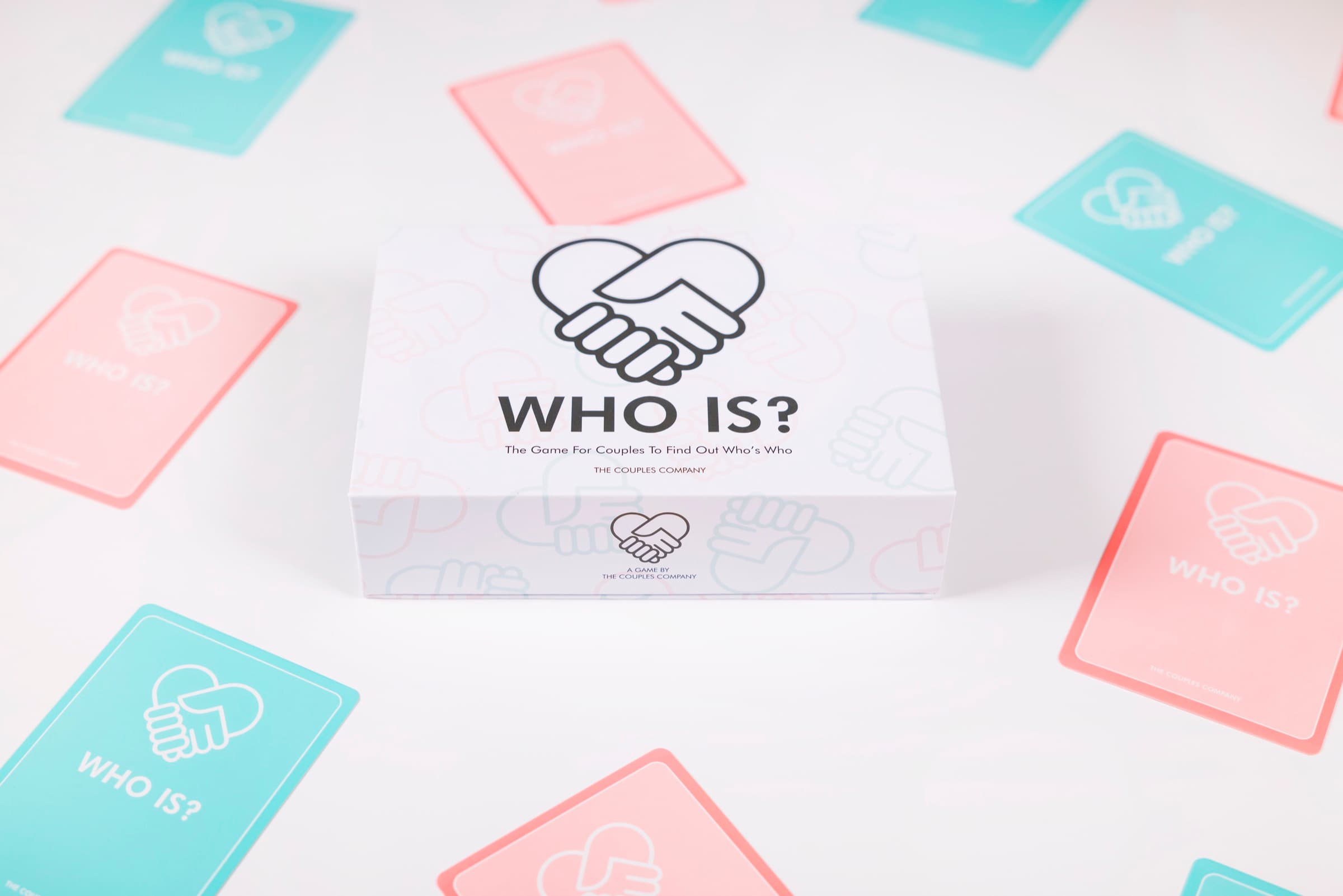
WhoIs? is our card game built on the same question: who knows who better? And the Couples Contract has you each rank your love languages in its Communication section, then keeps going: 21 sections, answered together or apart, then signed. Not legally binding.

Take the full love language quiz
The WhoIs? card game box with pink and teal cards scattered around it

WhoIs? Card Game

$29.99

free US shipping

167 question cards · 12 answer cards · 2 to 12+ players

  • Play as a couple or with a group
  • Crown your Relationship Royalty
  • A magnetic gift box
9:41

Alex & Sam

Your contract

2 sections signed19 to go
  • Core ContractSigned
  • DatesSigned
  • Finances8 of 23
  • MovingNot started
  • What IfsNot started
  • Family and FriendsNot started

Digital · 21 sections · together or apart

  • Reveal your answers side by side
  • A signed PDF for both of you
  • Revisit reminders, so it grows with you

Questions

Good to know

Is it really private?
Yes. The whole quiz runs in your browser. Your answers are never sent to us or anyone else, and they aren’t saved. Close the tab or tap Start over, and they’re gone. Your headline result shows straight away. To open your full results, add your email: we use your first names and results to send you a copy, and keep only your email address, which quiz you took and your headline result. Over the next week we send a few ideas and offers, and every follow-up email has an unsubscribe link.
Do we need two phones?
No, one is plenty. The first player puts the five love languages in order for themselves, then guesses the second player’s order, and passes the phone. The second player does the same, then you look at your results together.
How is the score worked out?
For each love language, a guess in the right spot earns 2 points and a guess one spot off earns 1, so each of you scores out of 10. The one you got most wrong is the love language your guess missed by the most.
We don’t know our love languages yet. Can we still play?
Yes. Go with your gut: putting five things in order takes about a minute. If you’d like a more careful read first, take our love language quiz, then come back and guess.
What if we got each other wrong?
Then the game did its job. Look at the one you each got most wrong, try the idea that comes with it, and play again in a few months to see if your guesses get closer.
Is this the official 5 Love Languages quiz?
No. The idea of love languages comes from Dr. Gary Chapman’s book The 5 Love Languages. This game is our own, and it isn’t affiliated with or endorsed by him or his publisher.