Skip to content
The new Couples Contract is here: together on one phone, or apart on two. Start yours

Free quiz · About 5 minutes · For two

How do we handle disagreements? A conflict style quiz for two.

Do you talk it out now or cool off first? Say something, or let it go? Answer 15 everyday scenarios on one phone, then see your two styles side by side, how they fit, and a short plan for your next disagreement.

  • Your answers never leave your browser
  • About five minutes
  • Made for two, on one phone
  • Free, no account needed

Before you start

Who’s playing?

First names are optional. They stay on this device unless you ask us to email your results.

  1. The first player answers 15 quick everyday scenarios.
  2. Pass the phone. No peeking.
  3. The second player answers the same ones.
  4. Sit together for the reveal.

Runs in your browser. Your answers are never sent or saved.

Four styles

Four ways to disagree, each with a strength.

Two questions decide your style: do you want to talk it out now, or after a breather? And do you say what’s bugging you, or let most things go?

  • Clear the air

    When something bugs you, you say so, and you’d rather sort it out now than let it simmer.

    Good at: Things don’t get the chance to fester. Your partner knows where they stand.

  • Cool off, then talk

    You’ll bring it up, once you’ve had a breather. You want to say it right, not just say it fast.

    Good at: Calmer talks, and fewer things said in the heat of the moment.

  • Let it roll

    Most things roll off you. When something does matter, you want it sorted fast and put behind you.

    Good at: Easygoing, quick to move on, slow to hold a grudge.

  • Let it settle

    You let a lot go, and when something does bother you, you need time before you can talk about it.

    Good at: Patient and steady. You rarely say something you regret.

How it works

15 scenarios, two styles, one plan.

  • 1Everyday moments: dishes in the sink, a heated talk at 11pm, a comment that stung. Pick what you’d really do.
  • 2Your answers place you on two scales, now or later and say it or let it go, and the corner you land in is your style.
  • 3Then both styles side by side, how they fit, and a four-step plan for your next disagreement.

Take it on a calm day. It’s about how you usually handle things, not the last fight you had.

Private by design

Your answers are a diary, not data.

  • The quiz runs entirely in your browser
  • Answers are never sent to us or anyone
  • Answers aren’t saved, so a refresh starts fresh
  • No account. Your email only if you want the full results

Want a copy? Add your email on the results, or take a screenshot before you close the tab.

What the research says

Almost every couple disagrees. How you do it matters.

Our four styles and the questions behind them are our own, written for couples. They’re built on published research about how couples handle conflict, and they aren’t taken from any other test.

  • Disagreeing is normal.

    In a community survey of married couples, nearly everyone reported some disagreements, most of them one or two a month.

    McGonagle, Kessler and Schilling, 1992

  • More than one style can work.

    In a four-year study of 73 couples, some stable couples argued openly and others mostly let things slide. What set struggling couples apart was hostility and too little warmth. A later study of nearly 2,000 couples did link a calm, listen-first style to better outcomes than a fiery or avoiding one.

    Gottman, 1993; Busby and Holman, 2009

  • Say the big things. Let small ones slide.

    In two studies of newlyweds, being direct, even blunt, about a serious problem was linked to the problem getting better over time, while the same bluntness about small irritations was linked to things getting worse. Hints, sarcasm and guilt trips weren’t linked to things getting better.

    McNulty and Russell, 2010; Overall and McNulty, 2017

  • Watch the push and pull.

    Across 74 studies, when one partner pushes to talk and the other pulls away, couples tend to be less happy. And in a study of 63 gay, lesbian and straight couples, whoever wanted more change tended to do the pushing.

    Schrodt, Witt and Shimkowski, 2014; Holley, Sturm and Levenson, 2010

  • Tired fights are worse fights.

    In a two-week diary study, people reported more conflict with their partner after a bad night’s sleep. And in a study of 43 married couples, when both partners were short on sleep, they argued more harshly.

    Gordon and Chen, 2014; Wilson et al., 2017

  • Try the outsider’s view.

    In a two-year experiment with 120 married couples, writing for seven minutes, three times a year, about a recent disagreement from the view of a fair-minded outsider kept relationship quality from sliding, while the comparison couples kept declining.

    Finkel, Slotter, Luchies, Walton and Gross, 2013
Sources

  1. McGonagle, K. A., Kessler, R. C., & Schilling, E. A. (1992). The frequency and determinants of marital disagreements in a community sample. Journal of Social and Personal Relationships, 9(4), 507-524. doi.org/10.1177/0265407592094003 (opens in a new tab)
  2. Gottman, J. M. (1993). The roles of conflict engagement, escalation, and avoidance in marital interaction: A longitudinal view of five types of couples. Journal of Consulting and Clinical Psychology, 61(1), 6-15. doi.org/10.1037/0022-006X.61.1.6 (opens in a new tab)
  3. Busby, D. M., & Holman, T. B. (2009). Perceived match or mismatch on the Gottman conflict styles: Associations with relationship outcome variables. Family Process, 48(4), 531-545. doi.org/10.1111/j.1545-5300.2009.01300.x (opens in a new tab)
  4. McNulty, J. K., & Russell, V. M. (2010). When “negative” behaviors are positive: A contextual analysis of the long-term effects of problem-solving behaviors on changes in relationship satisfaction. Journal of Personality and Social Psychology, 98(4), 587-604. doi.org/10.1037/a0017479 (opens in a new tab)
  5. Overall, N. C., & McNulty, J. K. (2017). What type of communication during conflict is beneficial for intimate relationships? Current Opinion in Psychology, 13, 1-5. doi.org/10.1016/j.copsyc.2016.03.002 (opens in a new tab)
  6. Schrodt, P., Witt, P. L., & Shimkowski, J. R. (2014). A meta-analytical review of the demand/withdraw pattern of interaction and its associations with individual, relational, and communicative outcomes. Communication Monographs, 81(1), 28-58. doi.org/10.1080/03637751.2013.813632 (opens in a new tab)
  7. Holley, S. R., Sturm, V. E., & Levenson, R. W. (2010). Exploring the basis for gender differences in the demand-withdraw pattern. Journal of Homosexuality, 57(5), 666-684. doi.org/10.1080/00918361003712145 (opens in a new tab)
  8. Gordon, A. M., & Chen, S. (2014). The role of sleep in interpersonal conflict: Do sleepless nights mean worse fights? Social Psychological and Personality Science, 5(2), 168-175. doi.org/10.1177/1948550613488952 (opens in a new tab)
  9. Wilson, S. J., Jaremka, L. M., Fagundes, C. P., Andridge, R., Peng, J., Malarkey, W. B., Habash, D., Belury, M. A., & Kiecolt-Glaser, J. K. (2017). Shortened sleep fuels inflammatory responses to marital conflict: Emotion regulation matters. Psychoneuroendocrinology, 79, 74-83. doi.org/10.1016/j.psyneuen.2017.02.015 (opens in a new tab)
  10. Finkel, E. J., Slotter, E. B., Luchies, L. B., Walton, G. M., & Gross, J. J. (2013). A brief intervention to promote conflict reappraisal preserves marital quality over time. Psychological Science, 24(8), 1595-1601. doi.org/10.1177/0956797612474938 (opens in a new tab)

When you’re ready for more

Agree on the rules while nobody’s upset.

The Couples Contract has you each say where the serious or difficult talks should happen, and rate your communication with a plan to make it stronger: 21 sections, answered together or apart, then signed. Not legally binding. Or keep it light with WhoIs?, the card game that settles who’s who.

Next: how do you like to make up?
9:41

Alex & Sam

Your contract

2 sections signed19 to go
  • Core ContractSigned
  • DatesSigned
  • Finances8 of 23
  • MovingNot started
  • What IfsNot started
  • Family and FriendsNot started

Digital · 21 sections · together or apart

  • Reveal your answers side by side
  • A signed PDF for both of you
  • Revisit reminders, so it grows with you
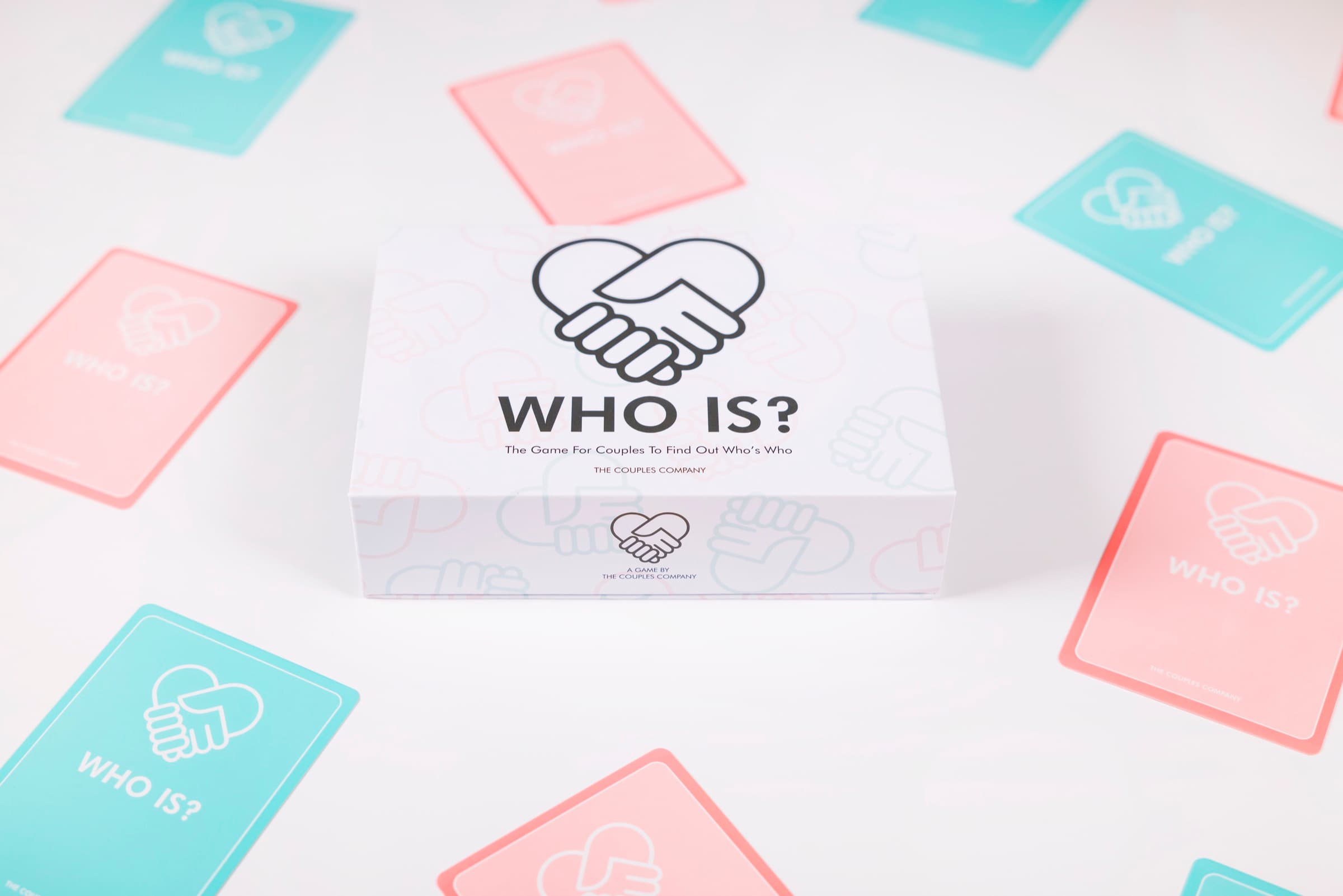
The WhoIs? card game box with pink and teal cards scattered around it

WhoIs? Card Game

$29.99

free US shipping

167 question cards · 12 answer cards · 2 to 12+ players

  • Play as a couple or with a group
  • Crown your Relationship Royalty
  • A magnetic gift box

Questions

Good to know

Is it really private?
Yes. The whole quiz runs in your browser. Your answers are never sent to us or anyone else, and they aren’t saved. Close the tab or tap Start over, and they’re gone. Your headline result shows straight away. To open your full results, add your email: we use your first names and results to send you a copy, and keep only your email address, which quiz you took and your headline result. Over the next week we send a few ideas and offers, and every follow-up email has an unsubscribe link.
Do we need two phones?
No, one is plenty. The first player answers 15 quick scenarios and passes the phone. The second player answers the same 15, then you look at your results together.
Can I take it on my own?
Yes. Answer your questions, then choose “See just your results” instead of passing the phone. You’ll see your style, and you can hand the phone to your partner afterward without starting over to get your plan.
How is my style worked out?
Five scenarios ask whether you’d rather talk it out now or wait, and five ask whether you’d say something or let it go. Each answer sits on a scale, and where your answers land on the two scales gives your style. Five more ask what brings you back together afterward.
Is one style better than the others?
Not in a simple way. In one well-known study, stable couples included some who argued openly and some who mostly let things slide; what marked trouble was hostility and too little warmth. One caution from other research: letting a serious problem slide is linked to it not getting better, so letting go works best for the small stuff.
What if our arguments feel scary?
Then this quiz isn’t the right tool. If an argument ever involves threats, fear or someone getting hurt, that isn’t a conflict style. In the US, the National Domestic Violence Hotline is free and private: call 1-800-799-7233, or text START to 88788. If you’re in danger right now, call 911.