Skip to content
The new Couples Contract opens soon: together on one phone, or apart on two. Get notified

Free quiz · About 5 minutes · For two

The love language quiz, made for two.

20 quick either-or questions about what makes you feel loved. You each answer privately on one phone, then see both your love languages side by side: what you share, where you differ, and small ideas to try this week.

  • Nothing leaves your browser
  • About five minutes
  • Made for two, on one phone
  • No sign-up, no email

Before you start

Who’s playing?

First names are optional. They never leave this page.

  1. The first player answers 20 quick either-or questions.
  2. Pass the phone. No peeking.
  3. The second player answers the same ones.
  4. Sit together for the reveal.

Runs in your browser. Nothing is sent or saved.

The five love languages

Five ways to feel loved, in plain words.

The five categories most people know, described our way, with one small way to show each. Most people value all five; the quiz shows which ones you lean toward.

  • Words of affirmation

    Hearing it: thanks, praise and encouragement, said out loud or written down.

    Try: Text one specific thing you noticed and liked today. Specific beats sweet.

  • Quality time

    Undivided attention: time together that’s really together, phones away.

    Try: Make one meal a week phone-free. Both phones, another room.

  • Acts of service

    Help that lightens the load: the chore, the errand, the coffee made before they ask.

    Try: Ask: what’s one thing I can take off your plate this week?

  • Gifts

    Thoughtful things, big or small, that say “I was thinking of you.”

    Try: Keep a note on your phone of things they mention wanting.

  • Physical touch

    Closeness you can feel: hugs, a hand to hold, a shoulder rub.

    Try: Hug hello and goodbye, every time, and make it a real one.

How it works

20 either-ors, five love languages.

  • 1Each question pairs two of the five. Both might sound nice, so pick the one that would mean more.
  • 2Each love language comes up 8 times, paired twice with every other one, so none gets a head start.
  • 3Your profile counts how often you picked each one. The highest is your top love language. A tie means you lean both ways.

Either-or questions force trade-offs you rarely face in real life, so read your results as leanings, not labels.

Private by design

Your answers are a diary, not data.

  • The quiz runs entirely in your browser
  • Names and answers are never sent to us or anyone
  • Nothing is saved, so a refresh starts fresh
  • No account, no email, no catch

Want to keep your results? Take a screenshot before you close the tab.

What the research says

A useful idea, not a law of love.

The idea of love languages comes from Dr. Gary Chapman’s book The 5 Love Languages, first published in 1992. Our quiz is our own, written from scratch, and it isn’t affiliated with or endorsed by Dr. Chapman or his publisher.

  • Most people value all five.

    Studies find that people tend to rate all five love languages highly, rather than having one main one.

    Impett, Park and Muise, 2024

  • Matching hasn’t been shown to help.

    In a study of 67 couples, those with the same top love language weren’t more satisfied than those without. A 2024 review of the research found no support for the matching idea either.

    Bunt and Hazelwood, 2017; Impett, Park and Muise, 2024

  • Some links, with limits.

    A 2022 study of 100 couples linked showing love in the way your partner prefers with higher satisfaction. It was a one-time survey, so it can’t show cause and effect, and the 2024 review notes that getting love in any form might explain it.

    Mostova, Stolarski and Matthews, 2022

  • So why take it?

    The 2024 review suggests the idea’s real value may be that it gets partners to reflect on, talk about and respond to each other’s needs. That’s what this quiz is for: a conversation starter, not a diagnosis.

    Impett, Park and Muise, 2024

Sources

  1. Chapman, G. (1992). The Five Love Languages: How to Express Heartfelt Commitment to Your Mate. Northfield Publishing. Now published as The 5 Love Languages.
  2. Impett, E. A., Park, H. G., & Muise, A. (2024). Popular psychology through a scientific lens: Evaluating love languages from a relationship science perspective. Current Directions in Psychological Science, 33(2), 87-92. doi.org/10.1177/09637214231217663 (opens in a new tab)
  3. Bunt, S., & Hazelwood, Z. J. (2017). Walking the walk, talking the talk: Love languages, self-regulation, and relationship satisfaction. Personal Relationships, 24(2), 280-290. doi.org/10.1111/pere.12182 (opens in a new tab)
  4. Mostova, O., Stolarski, M., & Matthews, G. (2022). I love the way you love me: Responding to partner’s love language preferences boosts satisfaction in romantic heterosexual couples. PLOS ONE, 17(6), e0269429. doi.org/10.1371/journal.pone.0269429 (opens in a new tab)

When you’re ready for more

Know what lands. Then write it down.

The Couples Contract has you each rank your love languages in its Communication section, then keeps going: 21 sections, answered together or apart, then signed. Or keep it light with WhoIs?, the card game that settles who’s who.

More free quizzes for two
9:41

Alex & Sam

Your contract

2 sections signed19 to go
  • Core ContractSigned
  • DatesSigned
  • Finances8 of 23
  • MovingNot started
  • What IfsNot started
  • Family and FriendsNot started

Digital · 21 sections · together or apart

  • Reveal your answers side by side
  • A signed PDF for both of you
  • Revisit reminders, so it grows with you
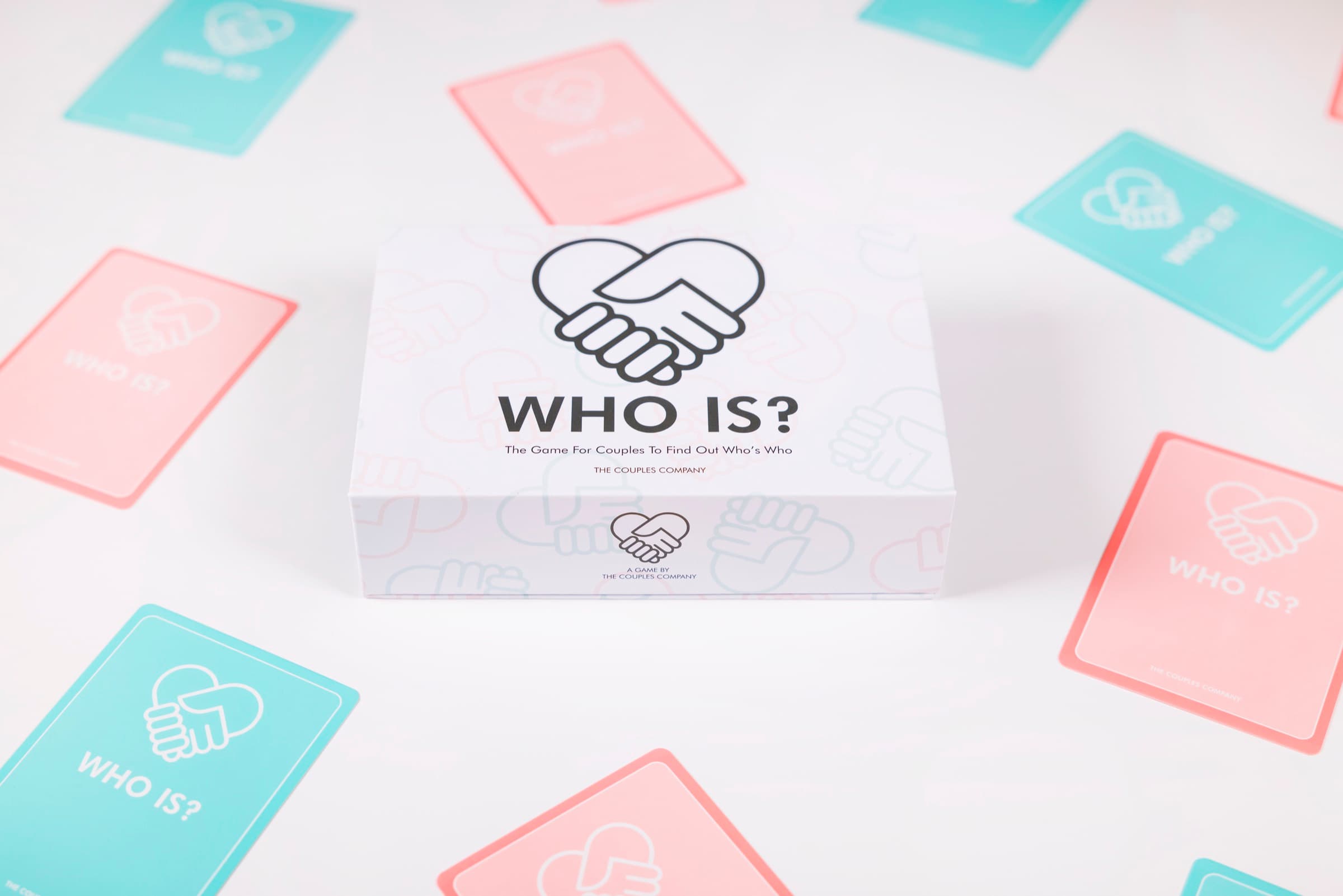
The WhoIs? card game box with pink and teal cards scattered around it

WhoIs? Card Game

$29.99

free US shipping

167 question cards · 12 answer cards · 2 to 12+ players

  • Play as a couple or with a group
  • Crown your Relationship Royalty
  • A magnetic gift box

Questions

Good to know

Is this the official 5 Love Languages quiz?
No. The idea of love languages comes from Dr. Gary Chapman’s book The 5 Love Languages, first published in 1992. This quiz is our own, written from scratch, and it isn’t affiliated with or endorsed by Dr. Chapman or his publisher.
Is it really private?
Yes. The whole quiz runs in your browser. Your names and answers are never sent to us or anyone else, and nothing is saved. Close the tab or tap Start over, and it’s gone.
Do we need two phones?
No, one is plenty. The first player answers 20 either-or questions and passes the phone. The second player answers the same 20, then you look at your results together.
Can I take it on my own?
Yes. Answer your questions, then choose “See just your results” instead of passing the phone. You’ll get your own profile, and you can hand the phone to your partner afterward without starting over.
How is my love language worked out?
Each question pairs two of the five love languages. Each one comes up 8 times, paired twice with every other one, so none gets an advantage. Your profile counts how often you picked each, out of 8. The highest count is your top love language, and a tie means you lean more than one way.
Is the love language idea backed by science?
Only partly. Studies find that most people value all five, rather than having one main love language, and couples whose love languages match haven’t been shown to be any happier. A 2024 review by Impett, Park and Muise concluded the core claims have limited support. We still think it’s a useful way to start talking about what makes each of you feel loved, so that’s how we use it.
What if our love languages are different?
That’s fine. Research hasn’t found that matching makes couples happier. Use your results to learn what lands for each other, and keep the other four on the menu too.