Two national studies, followed for years
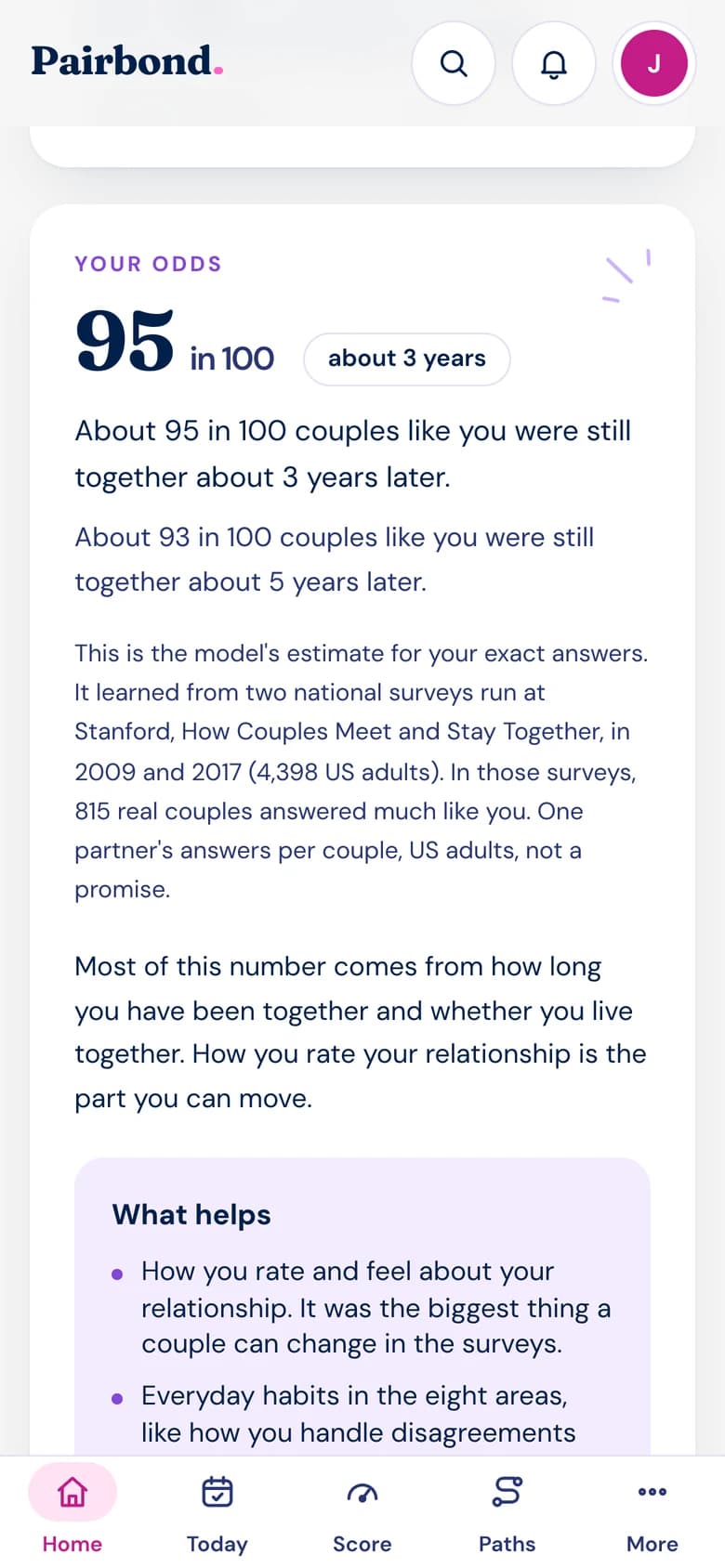
The odds rest on two national studies of real relationships in the United States, which went back to the same people again and again to see who stayed together.
How Couples Meet and Stay Together, 2009 and 2017
- people surveyed
- 7,512people surveyed
- completed interviews in 9 waves
- 19,124completed interviews in 9 waves
- the longest anyone was followed
- Up to8.5 yearsthe longest anyone was followed
- relationship outcomes, 749 of them breakups
- 4,481relationship outcomes, 749 of them breakups
- 2009 study, wave 1, 2009: 4,002 interviews
- 2009 study, wave 2, 2010: 2,520 interviews
- 2009 study, wave 3, 2011: 1,960 interviews
- 2009 study, wave 4, 2013: 1,536 interviews
- 2009 study, wave 5, 2014 to 2015: 1,127 interviews
- 2009 study, wave 6, 2017: 640 interviews
- 2017 study, wave 1, 2017: 3,510 interviews
- 2017 study, wave 2, 2020: 2,107 interviews
- 2017 study, wave 3, 2022: 1,722 interviews
- 112,000+ years of relationship history, across two national studies
- 19,000+ years of real relationships tracked
Years of relationship history add up the years together that people reported. Years tracked add up the time each person was followed after their first interview. Rosenfeld, Thomas and colleagues, How Couples Meet and Stay Together, Stanford University Libraries, 2009 and 2017 cohorts. Run at Stanford University. Pairbond is not affiliated with Stanford.